FEATURE & REVIEW
18.10.2026Bunker: When money is not enough to feel safe
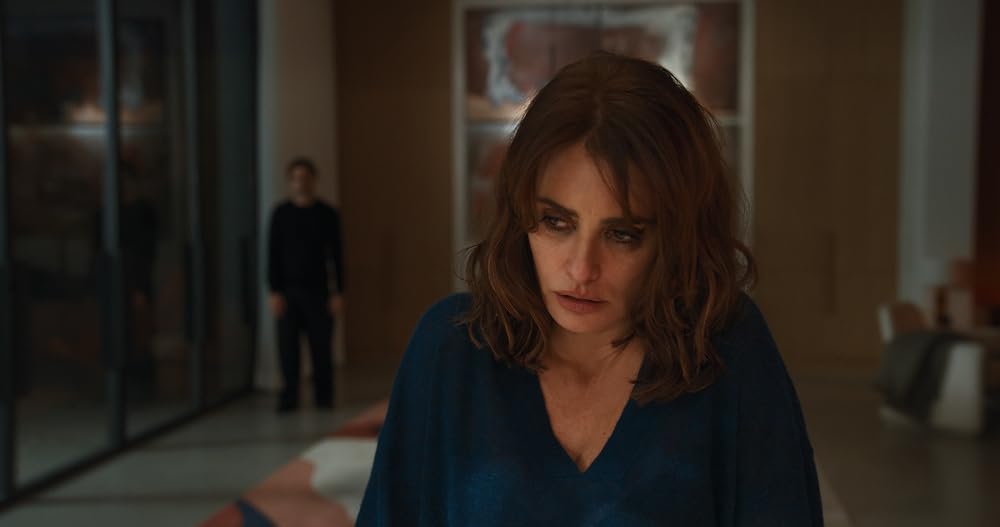
Bunker, directed by Florian Zeller, is a film that manages to keep the viewer in a state of anxiety and constant physical discomfort. It is not only what happens to generate tension, but above all what might happen.
The paranoia gradually enters history, conditioning the behavior of the characters and, inevitably, also that of us spectators. Everything starts with an extremely rich man who wants to build a bunker. But why should someone feel the need to build such a structure? What do you want to protect yourself from? What do you know that the leading family doesn't know?
Protagonists Miguel and Sofia and their two daughters. The perfect and successful family, which represents the dream of immigrants who made it. Also for them, safety stops being a necessity and becomes an obsession, even before being contacted for the construction of this infamous bunker.
But money, in this film, is not just a protective tool. It is above all the means through which the characters try to exercise their power over others.
Miguel buys the neighbor not to allow him to have a window in his wall, tries to buy Sofia through the purchase of a painting and, in turn, is put in front of an even higher economic offer when the technological billionaire proposes him double to convince him to realize the bunker, despite his intention to give up the project.
Everyone's trying to buy everyone. It is a particularly interesting mechanism because it shows how economic power never fully belongs to one person. Those who can buy someone can, in turn, find themselves in front of someone willing to offer more. No matter how much money you own: there will always be someone able to exercise greater power.
And it is precisely through Miguel that another contradiction emerges, that between personal aspirations and economic success. Miguel never seems completely convinced of his choice. It is attracted by professional and economic opportunities, but continues to retain doubts. For this reason, his path does not represent such a sudden change, as the confrontation with convictions he had never really abandoned.
The relationship between art, money and architecture also emerges through some visual choices. The black painting, which recalls the Black Square of Kazimir Malevič, creates an interesting parallelism with the covered window that prevents natural light from entering, when the neighbor renounces light due to the privacy of the family.
On the one hand, black as an artistic expression, on the other, darkness as a consequence of the need to isolate and protect itself. Two visually recalled images, but taking different meanings. Paranoia does not concern, however, only those who own money. It ends up affecting the way people judge.
The character of the neighbor, for example, highlights how easily social membership can affect our suspicions. The way of speaking, dressing or simply presenting oneself can become enough to build an idea on someone, even without having concrete elements to support it.
And this is where the film can directly involve the viewer. The distrust of the characters also becomes ours, leading us to make judgments that perhaps, in other circumstances, we would not have expressed with the same ease.
Every single scene is a real slap in the face and serves everything on a silver plate. Nothing is left to imagination and our morality is constantly tested.
A small masterpiece of social denunciation, which however loses a star for product placement by the bourgeois family. Possibly to review and analyze without the surprise effect that the final reserves us.
SHARE
Share this article
Hook
Read the full story on Cinematic Life.
Keywords
bunker · money · enough · feel · safe
Hashtags
#CinematicLife #Bunker #Money #Enough #Feel
COMMENTS
Join the conversation
No comments yet. Be the first to leave one.