FEATURE & REVIEW
05.10.2026Cornell University: What Does It Cost to Report Sexual Assault, and What Does It Cost to Be Accused?
A case of alleged sexual assault, seven students accused, and a university called upon to answer for its decisions. But behind the investigations, a broader question emerges: who really pays the price?
A case of alleged sexual assault, seven students accused, and a university called upon to answer for its decisions. But behind the investigations, a broader question emerges: who really pays the price?
When we talk about sexual violence, we are used to focusing on two figures: the victim and the alleged perpetrator. Much more rarely do we stop to consider what happens after a report is made, when institutions, disciplinary proceedings, reputation and power come into play.
Reporting sexual assault can mean facing a second ordeal, one made up of questioning and the need to repeatedly recount a traumatic experience. The person reporting it may find herself having to justify her decisions, her behaviour, and even the way she reacted or how she lived her life after the trauma.
How much had she had to drink? Why was she there? Why didn’t she leave? Why didn’t she report it immediately?
These are questions that may be necessary as part of an investigation, but they can also end up weighing on the person as a form of judgement.
And this is precisely where a feminist reflection comes into play.
We need to question how consent, vulnerability and the credibility of those who report sexual violence are interpreted.
There is also another issue: what happens when the institutions called upon to intervene must simultaneously protect the person making the report, guarantee a fair process for those accused, and protect their own reputation?
A university is an institution that represents professional opportunities, social relationships and the building of a future. Being admitted to one of the most prestigious universities in the United States means gaining access to a network of opportunities that can shape someone’s social, professional and personal future.
But the reputation of an institution should never become more important than the people within it, like a golden blanket thrown over a food stain on the floor.
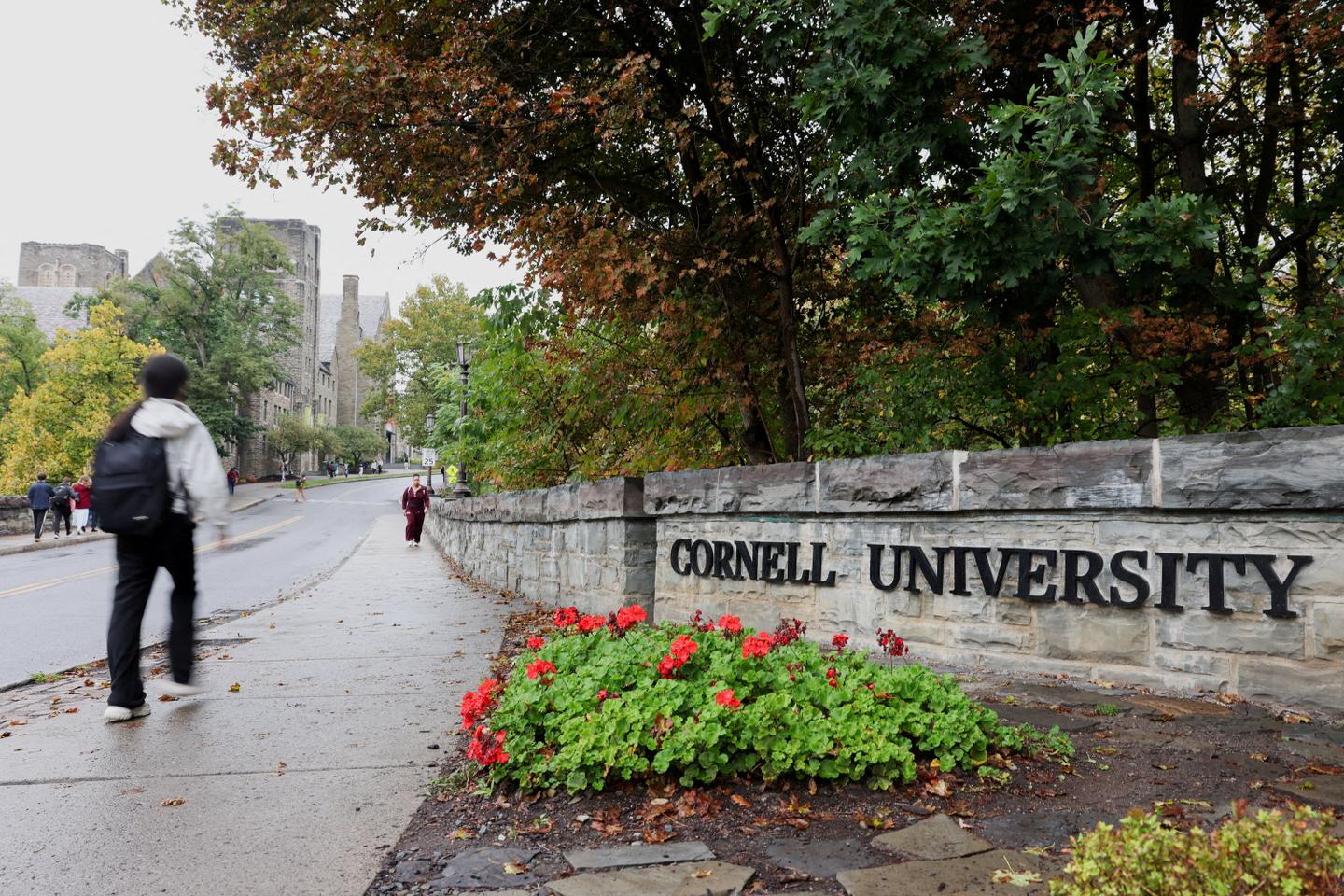
The Cornell University case raises exactly these questions.
What price does someone have to pay for reporting an alleged sexual assault? What, on the other hand, are the consequences for those who are accused? And how much does a university’s reputation weigh when it is forced to confront allegations this serious?
To try to answer these questions, let’s start with the facts.
On the night between 19 and 20 October 2024, a Cornell University student was allegedly sexually assaulted in an incident that, according to her complaint, involved seven members of the Chi Phi fraternity.
On 14 September 2026, a civil lawsuit was filed against the university, the fraternity, seven students and other defendants. The woman, identified in court documents under the pseudonym Jane Doe, is challenging not only the alleged assaults, but also the way the case was handled by the institutions that were supposed to protect her.
The story, however, did not begin with the civil lawsuit.
According to the reconstruction published by CBS News, Jane Doe underwent a sexual assault examination on 7 November 2024 and subsequently reported the incident to campus police on 8 November. A few days later, she gave investigators a detailed interview.
Cornell had already imposed temporary measures on the students involved and the fraternity. In January 2025, a formal investigation was also launched under Title IX procedures.
Title IX is a US federal law that prohibits sex-based discrimination in educational programmes receiving federal funding. University proceedings are separate from criminal investigations and can result in disciplinary sanctions regardless of whether criminal proceedings are ultimately brought.
The internal proceedings continued for several months and resulted in different outcomes.
According to information reported by CBS News, two students were expelled and two were suspended for at least two semesters. A fifth student had already graduated before a sanction could be imposed, while two others were not found responsible for sexual misconduct through the university process.
The Chi Phi fraternity was shut down in 2024 and remains banned from campus today.
These outcomes matter because they show that the case cannot be presented as though all seven accused students received the same punishment. At the same time, disciplinary findings are not the same as a determination of criminal responsibility.
One of the aspects that attracted the most public attention concerns written essays that, according to the civil complaint, some of the accused students may have been allowed to submit in order to reduce their disciplinary sanctions.
Obviously, we were all shocked by the idea that writing an “essay” could apparently have been enough to be “forgiven”.
The story quickly sparked a debate over whether the measures imposed by the university were proportionate, in this case finally creating some critical thinking on social media.
On 28 September 2026, Kyle Kimball, Cornell’s Vice President for University Relations, publicly disputed the account suggesting that writing essays had been the only disciplinary consequence imposed on the students involved.
He confirmed the expulsions and suspensions, but the statement did not clarify the individual disciplinary conditions. And this is where an important distinction needs to be made.
The fact that serious sanctions were imposed does not necessarily rule out the possibility that some students were given the opportunity to have those sanctions reduced through written essays.
On the other hand, it would not be accurate to present those essays as the only punishment when we know that expulsions and suspensions were also imposed.
The issue, then, is not simply whether sanctions existed, but how they were established and applied.
What conditions were attached to any potential reduction? Which measures actually remained in place?
The answer is essential if we want to understand the real consequences of the disciplinary process.
And it becomes even more important if we want to address the central question of this article: what price did the people involved actually pay?
The controversy surrounding the written essays represents only one part of the case.
Another issue, perhaps an even more important one, concerns the investigative material collected by campus police and the information subsequently reviewed by the Tompkins County District Attorney’s Office.
Between September and October 2026, discrepancies emerged between statements made by the university and those made by judicial authorities.
At the centre of the controversy is an approximately 120-page transcript of the interview Jane Doe gave investigators in November 2024.
Former District Attorney Matthew Van Houten said that he had not received that transcript and had based his assessment on a six-page summary statement.
A summary can, of course, contain the essential elements of a witness statement. But when discrepancies emerge between the original material and what authorities actually reviewed, it becomes necessary to understand which information was considered and which was not.
Documents reviewed by CBS News and ABC News reported further details from the complainant’s statements, reigniting debate over the initial decision not to pursue criminal charges.
The situation became even more complicated when Cornell published a series of FAQs about its handling of the case.
In the original version, the university stated that it had shared all investigative information with the District Attorney’s Office, including a Snapchat screenshot. Van Houten, however, said he had not received that image.
On 2 October, the Cornell Daily Sun reported that Cornell had subsequently amended the FAQs, removing the statement that all investigative information had been shared.
We still do not know whether these discrepancies were the result of communication problems, different interpretations of the material that was transmitted, or other circumstances.
But one thing is clear: before assessing whether the decisions made in 2024 were appropriate, we need to reconstruct exactly what information was available and how it was used.
On one side, Cornell needs to clarify which documents were actually shared. On the other, it is necessary to understand which materials the District Attorney’s Office received and chose to review.
On 28 September 2026, the Tompkins County District Attorney’s Office announced that the criminal investigation would be reopened.
On 1 October, New York Governor Kathy Hochul appointed Attorney General Letitia James as special prosecutor to take over the investigation.
The decision came after the publication of the civil lawsuit and new media investigations, which brought renewed attention to the information collected in 2024 and to the way the case had previously been handled.
The reopening of the investigation is not evidence of the accused students’ guilt, but it makes reconstructing the decisions made during the original investigation even more important.
Meanwhile, Cornell agreed to submit its handling of the case to an independent review.
On 3 October, President Michael Kotlikoff released a video message to the university community, acknowledging the seriousness of the issues that had emerged and promising greater transparency.
He also announced that the Board of Trustees would provide further details about the external review and that the university would reassess the role of fraternities and sororities on campus.
These are important commitments, but we will need to see what they actually produce.
An independent review can clarify administrative responsibility and identify potential problems within existing procedures. Its value, however, will also depend on what information is made public and what changes Cornell ultimately decides to introduce.
On 3 October, the Cornell Daily Sun published another story that added a further element to the reconstruction.
According to documents reviewed by the newspaper, campus police had made a drug-related arrest at the Chi Phi fraternity house approximately 22 hours before the incident reported by Jane Doe.
This does not prove that Cornell knew about the alleged sexual assault before it happened, nor does it prove that a different intervention would necessarily have prevented it.
But it does raise questions about prevention procedures and what information the university had regarding activities taking place at the fraternity.
What measures were taken following that arrest? Had there already been reports concerning activities at the Chi Phi house?
These are questions that need to be answered through the documents.
The prevention of sexual violence cannot be assessed solely through the measures taken after a report is made. We also need to examine how safety procedures worked and whether any earlier interventions had taken place.
So let’s return to the original question. On one side, we have a woman who, according to her lawyer, left her studies after the alleged incident. Almost two years later, she remains involved in legal proceedings while authorities re-examine investigative material collected in 2024.
On the other, we have seven accused students whose disciplinary cases produced different outcomes: two expulsions, two suspensions, one student who had already graduated, and two students who were not found responsible for sexual misconduct through the university process.
These are consequences we need to understand before making any judgement about whether the sanctions were proportionate. But there is also a third element: the role of the institutions.
Because beyond the individual responsibility that is still being determined, this case has raised questions about the way a university and judicial authorities handled information, procedures and communication.
And perhaps this is where the issue becomes broader. When we talk about sexual violence, we often focus our attention on what happened. But what happens afterwards deserves to be examined too.
Institutional procedures, decisions and timelines can have concrete consequences for the lives of the people involved.
The Cornell case therefore asks us to consider not only the price of making a report, but also the value we place on protection, transparency and accountability.
Because the prestige of an institution should also be measured by the way it responds to the situations that threaten to call that prestige into question.
SHARE
Share this article
Hook
A case of alleged sexual assault, seven students accused, and a university called upon to answer for its decisions. But behind the investigations, a b…
Keywords
cornell · university · what · does · cost
Hashtags
#CinematicLife #Cornell #University #What #Does
COMMENTS
Join the conversation
No comments yet. Be the first to leave one.