FEATURE & REVIEW
12.10.2026Masc: Finding Yourself Beyond Other People’s Expectations – An Interview with Bertil Nilsson and Joshua Griffin
Masc – An Interview with Bertil Nilsson and Joshua Griffin
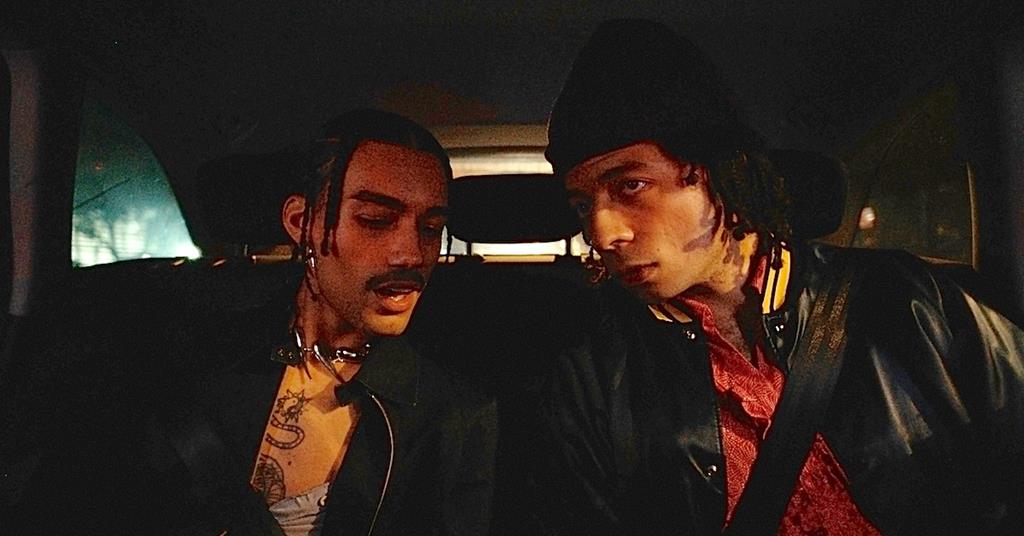
Masc, directed by Bertil Nilsson, tells the story of Robin, a young queer autistic man who moves through different environments, jobs and relationships as he tries to find his place in the world. During the BFI London Film Festival, we sat down with director Bertil Nilsson and Joshua Griffin, the film’s lead actor and co-creator of the story, to discuss identity, neurodivergence and the role of cinema in expressing emotions.
One of the things that struck me most was the way Robin seems to live so many different lives. Do you think he adapts himself to please others, or is he trying to figure out who he is? Because those aren't necessarily the same thing.
Bertil and Joshua: It's actually a combination of both. Robin is trying to understand who he is and where he belongs, but he believes that pleasing other people is the way to achieve that. The search for identity can be conscious, whereas the need to adapt becomes almost unconscious. It's as though he thinks that by doing what others expect of him, he'll finally become the person he's supposed to be. But you can't please everyone.
The camerawork also gave me a very particular feeling. Some scenes are shot very directly, almost head-on, and yet I never felt completely inside them. It was almost like secretly watching Robin's life without being noticed. Was that a deliberate choice connected to his search for identity?
Bertil: I really like that feeling of observing, almost as though you're eavesdropping. I was operating the camera myself, and I wanted to create the sense of an invisible presence. I like connecting ideas, moving from one thought to another and creating parallels. That's something we developed both during the writing process and in the editing room.
We chose to begin with a fragmented narrative because Robin's experience is fragmented too. At the beginning, we don't even show his face, because he doesn't yet know who he is. Gradually, we start to see more authentic aspects of his personality, until we can finally recognise him as a whole person.
I think one of the moments when the real Robin emerges most clearly is through movement and dance. How did you develop that aspect of his character?
Bertil: I love dance, and I've worked with dancers for much of my career, although through the camera, as I'm a photographer. We wanted movement to become a way of revealing the real Robin. He constantly changes his behaviour, his words and his physicality, but something of his identity keeps coming through. We worked with Harry Price to develop those movements.
Bertil and Joshua: The body can express something authentic that words aren't always able to communicate. For Robin, dance represents a possibility of liberation, but also a moment of great vulnerability. Exposing yourself in front of others can be terrifying, especially when you're constantly seeking their approval.
I also work with children, and I often encourage them to express their emotions through their bodies. That's one of the reasons I loved these sequences so much. Throughout much of the film, Robin seems to hold back what he's feeling, whereas through dance he can finally express it.
Bertil and Joshua: Movement also allows you to be more present in the moment, rather than remaining trapped in your thoughts and anxiety. It's a bit like singing: sometimes we convince ourselves that we're not capable of doing it, and we end up giving up something that could actually be incredibly liberating.
I also really appreciated the representation of neurodivergence. You don't constantly try to explain how a different brain works; instead, you simply show how someone experiences everyday life. Do you hope neurodivergent audiences will see themselves in Robin?
Bertil and Joshua: We hope so, and that's been one of the most rewarding aspects of the screenings. We've received exactly that kind of response from audiences.
We didn't set out with the intention of achieving a particular result. We simply wanted to create something that felt authentic to us. It was a very collaborative process, from the acting and directing to the editing and music.
Another scene that stayed with me was the photoshoot, when Robin finally cries. I wondered whether he's able to open up precisely because there's a camera in front of him, rather than having to engage in a direct social interaction.
Bertil: That's an interesting interpretation. For me, as a photographer, the camera is a tool through which I observe other people and process emotions.
But that scene also comes from the idea of delayed emotional processing. Robin accumulates tension and feelings throughout the film without ever really managing to process them. Sky's emotional openness in the previous scene finally allows something to come to the surface.
In a way, that's also what I do through cinema: access worlds and experiences that I find more difficult to engage with in everyday life.
That also makes me think about the scene following the robbery. Robin returns to work and, even though the others can sense that something is wrong, he doesn't tell them what happened. It's almost as though he's trying to prevent his different lives from coming into contact with one another.
Bertil and Joshua: Exactly. We all have different environments: work, friends, family. Sometimes we want to keep those worlds separate, but inevitably they end up overlapping.
We can try to separate the different aspects of our lives, but we can't do the same with our emotions. Those follow us everywhere.
Visually, I also noticed a transition from the more enclosed and fragmented spaces of the workplace to the open spaces towards the end of the film. Was that a way of representing Robin's personal growth?
Bertil: Yes, we really wanted to create a gradual sense of openness. At the beginning, the framing is very tight, and we don't even see Robin in his entirety.
Towards the end, we begin to see more of him within the space and in relation to other people. It's as though he's finally finding his place within a group.
I'd like to finish with a slightly different question: what's something you'd like to share about the film that nobody has asked you yet?
Bertil and Joshua: That's a beautiful question! We've done so many interviews today that it's difficult to come up with something new.
Actually, we haven't spoken much about the music. It was a wonderful collaboration with the composer, Daniel. He had seen some of the early chapters and had already composed several pieces, working with a bass clarinettist, before we'd even finished filming.
What's interesting is that the music used in the final dance sequence had already been written without the composer ever having seen the choreography.
We edited the sequence, added the piece, and it worked perfectly, with very few adjustments. From that point onwards, we worked backwards, building the rest of the score around that initial composition.
SHARE
Share this article
Hook
Read the full story on Cinematic Life.
Keywords
masc · finding · yourself · beyond · other
Hashtags
#CinematicLife #Masc #Finding #Yourself #Beyond
COMMENTS
Join the conversation
No comments yet. Be the first to leave one.