FEATURE & REVIEW
31.10.2026STORIES: When Dance Becomes a Language of Its Own
An interview with Romain Rachline Borgeaud, the creative mind behind STORIES – The Tap Dance Sensation.
Some stories don't need words to be told. Sometimes, all it takes is a movement, a look, a perfectly timed step or a sudden change of light.
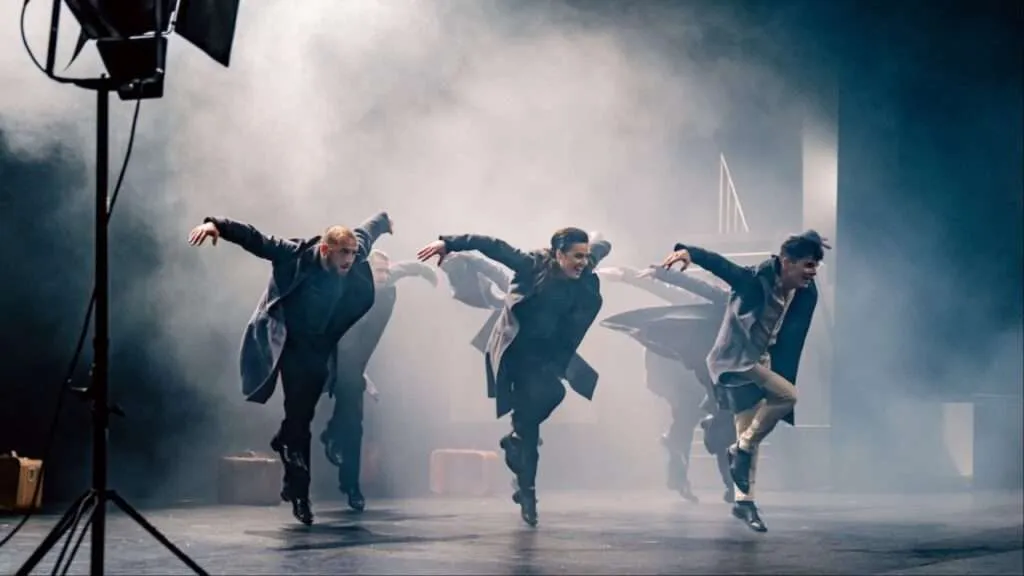
When I watched STORIES – The Tap Dance Sensation at London's Peacock Theatre, I was expecting an impressive display of tap dancing. What I wasn't expecting was how much storytelling could happen without a single line of dialogue.
Because STORIES is much more than tap dancing. Contemporary dance, jazz, theatrical performances, music and lighting all come together to create something that feels somewhere between a musical, a play and a film unfolding on stage.
The dancers particularly impressed me. Their facial expressions, their movements, even the smallest gestures carried emotions with such precision that, at times, I almost forgot I was watching dancers rather than actors.
And then there were the references. I couldn't stop thinking about Romeo and Juliet, West Side Story, and even The Greatest Showman. Some moments also brought me back to the Theatre of the Absurd, which immediately reminded me of my school days and a teacher who was absolutely obsessed with it.
Beyond the spectacle, however, I found myself thinking about something else: innocence, power, and the choices that shape who we become.
I had the opportunity to speak with Romain Rachline Borgeaud, the show's creator, choreographer and composer, about his inspirations, his creative process and the challenge of telling a story through movement.
From Shakespeare to Bernstein: Finding the Inspirations
While watching STORIES, I kept thinking of Romeo and Juliet, West Side Story and even The Greatest Showman. Some parts also reminded me of the Theatre of the Absurd, which took me straight back to my school days and a teacher who absolutely loved it. Were any of these actually inspirations, or am I seeing things?
West Side Story is definitely an inspiration for me in terms of choreography, staging but also writing the music for the show. Some parts openly pay tribute to Bernstein’s work.
Romeo & Juliet isn’t a direct inspiration but I guess it is through West Side Story. I have to say The Greatest Showman isn’t at all, BUT I guess there is something spectacular to the show that relates to that approach, especially in the « encores » with the drums.
When Dancers Become Actors
The dancers honestly blew me away. Their expressions and movements were so detailed that it felt like watching actors, just without the words. How do you even cast for something like that?
I don’t really cast for the show, I train dancers for months, sometimes years and when they are familiar enough with the company’s language and acting through movement, I offer them to be part of the show.
That’s probably what makes the company a company and not just the production of a show. There is an inevitable artistic process to get through in order to be ready to go onstage.
Building a Story, One Movement at a Time
I'm really curious about how you put everything together. You've got the story, the music, tap, jazz, contemporary dance... Where do you even start?
I started with images, ideas, concepts, emotions that I would want the audience to feel. This lead me to write a script that would assemble all these. Exactly like if I was building a novel or a movie. Scene by scene.
Then, I worked on the set design to be able to tell that story visually with recognizable places and different ambiances. Then came the music which I wrote thinking of staging and choreography and trying to support the storytelling with the score. Then, I wrote the staging scene by scene, to confirm what would happen with what musical part. At last, I went in the studio and created the movement to give life to all the characters.
When the Performance Feels a Little Too Real
There's a moment during the killing scene when I couldn't quite tell what was part of the performance and what was actually happening. Was that on purpose? It also really reminded me of Mercutio in Romeo and Juliet.
That’s exactly what I’m aiming for. That’s the tipping point of the show where reality blurs and the movie becomes real. I love the audience to wonder for a few seconds if everything that happens on stage is rehearsed or something’s going wrong.
Innocence, Power and Growing Up
I loved what you did with the lighting, and the whole story made me think a lot about losing innocence and the power games between the characters. Were those themes something you had in mind from the start, or did they develop along the way?
The theme on which the whole show is built is duality. That game of power is an expression of our plural selves. But I like the audience to understand the story in their own way.
One thing I didn’t see coming is that the show is also about coming of age. The lead role was supposed to be played by a 25 years old but the performer I chose when we created the show was 17. Choosing him also meant to shape the show differently.
Today, 6 years after creating the show, I think Icarus finding himself along the way is deeply related to the duality matter. Losing innocence, making choices, speaking for himself and facing his demons are the path for him to truly step into his life.
More Than Just Tap Dancing
What stayed with me after STORIES wasn't simply the technical ability of the dancers, although that alone would have been worth watching.
It was the way every element seemed to have its own role in telling the story. The lighting wasn't just there to illuminate the stage. The music wasn't simply accompanying the choreography. And the dancers weren't just performing impressive routines.
They were creating characters, relationships and conflicts, sometimes through movements so small that they could easily have gone unnoticed.
I also found it interesting that some of the connections I made as an audience member weren't necessarily intended by the creator. That's one of the things I appreciate most about theatre: the freedom to recognise something personal in a story that someone else has created.
And perhaps that's what makes STORIES particularly interesting. Beneath the spectacular choreography and theatrical staging, there's a much more intimate journey about growing up, making choices and discovering who you are.
After all, a story doesn't always need words to make itself understood.
---
Special thanks to the press office for making this interview possible, and to Romain Rachline Borgeaud himself for taking the time to answer my questions and share his creative process and the vision behind STORIES.
Interview responses provided in writing by Romain Rachline Borgeaud.
SHARE
Share this article
Hook
An interview with Romain Rachline Borgeaud, the creative mind behind STORIES – The Tap Dance Sensation.
Keywords
stories · dance · becomes · language
Hashtags
#CinematicLife #Stories #Dance #Becomes #Language
COMMENTS
Join the conversation
No comments yet. Be the first to leave one.